Atraumatic Nose Cones for Catheter Prototyping
Bondable, injection-molded Pebax atraumatic tips for catheter and delivery system prototyping. Seven sizes from 12 to 24 French, four Pebax durometers from 25D to 72D, optional radiopaque or lubricious additives, 1.4 mm guidewire lumen with stepped distal seal. Order single units or packs, ship in seven days.
What it is
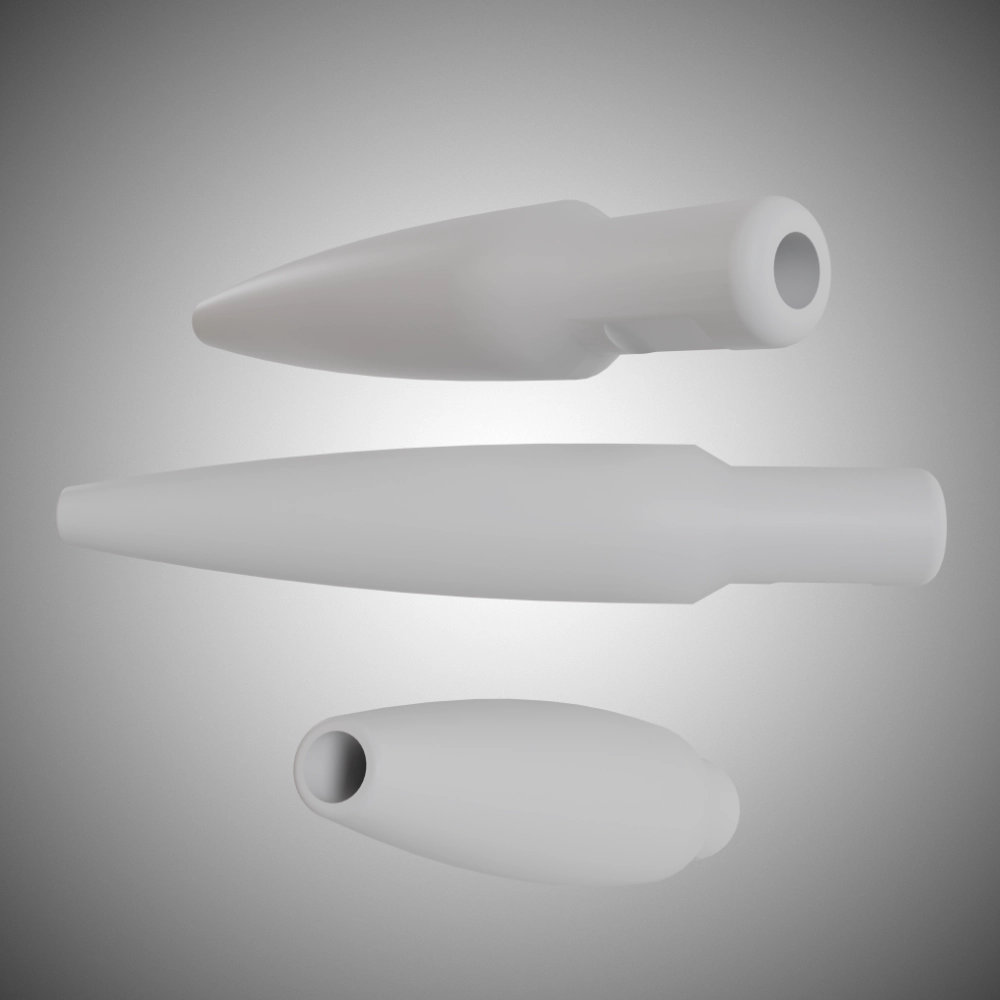
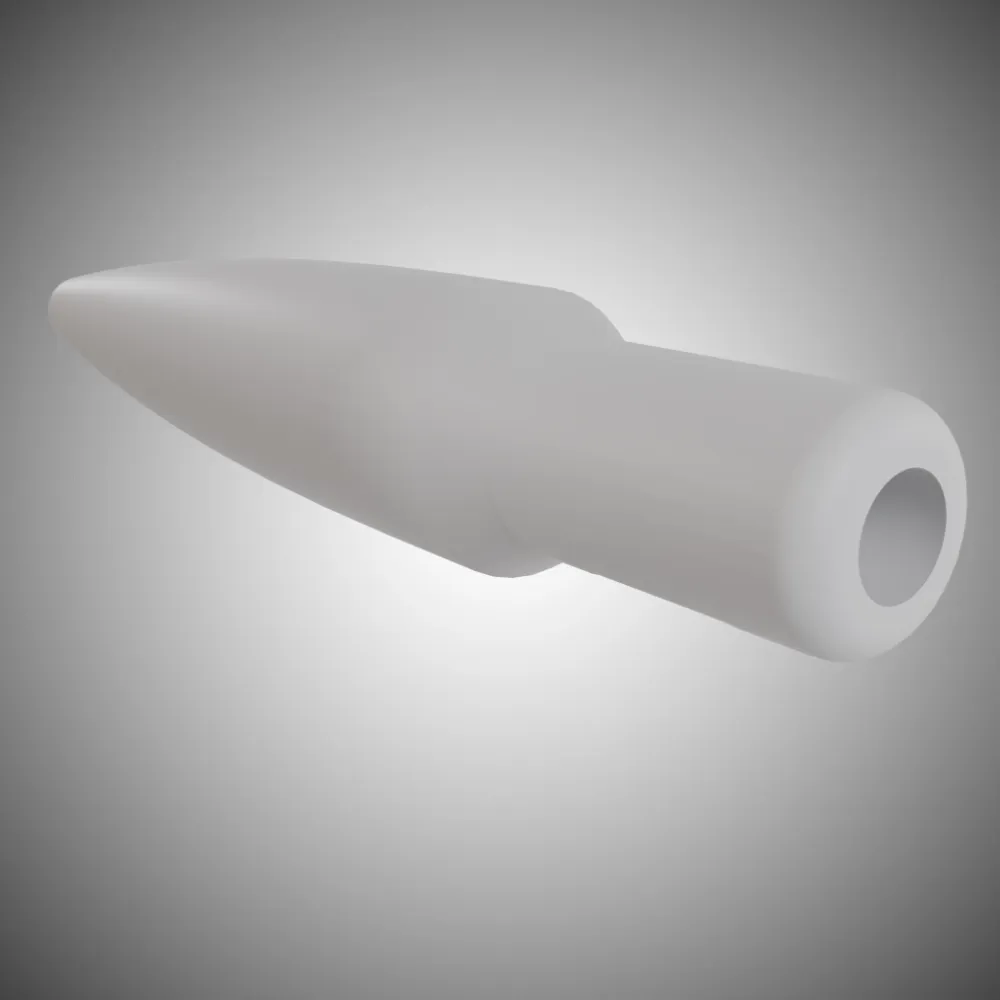
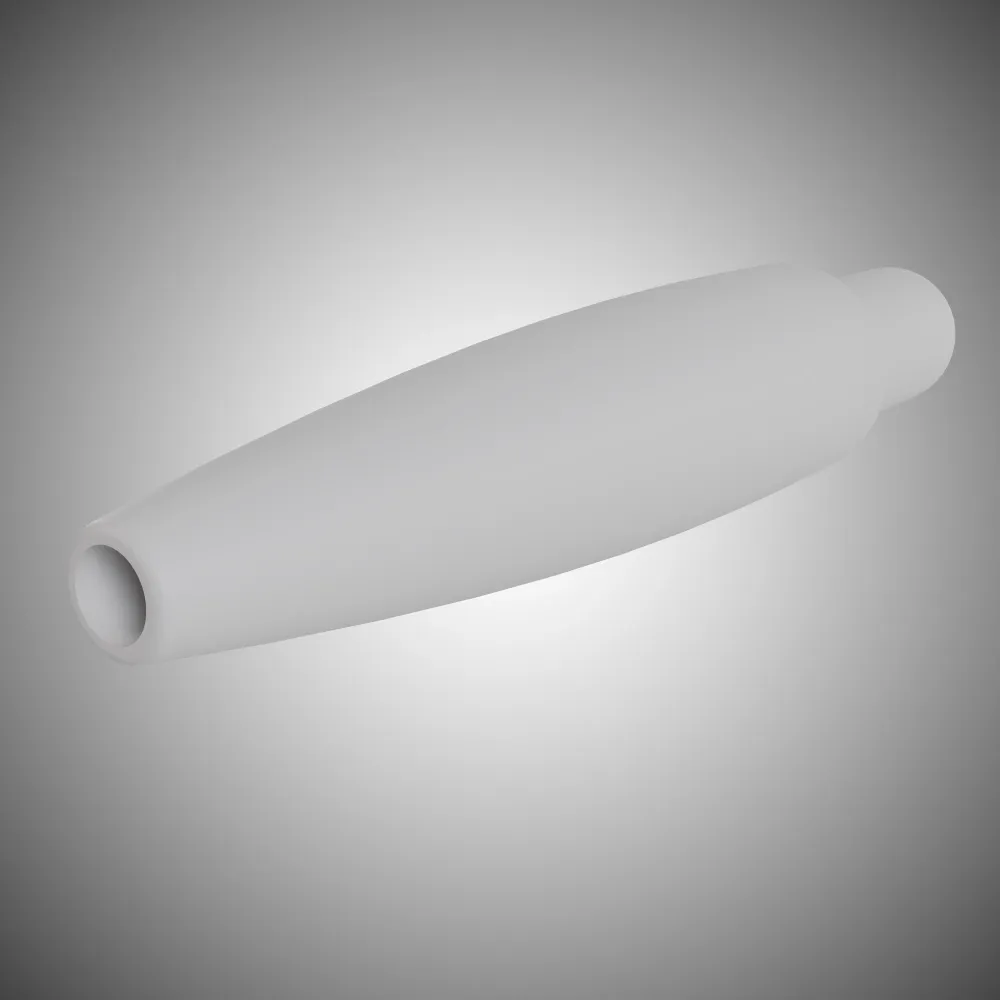
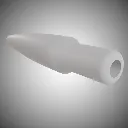
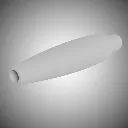
Protobrix Nose Cone is a soft, tapered, injection-molded distal tip designed to be bonded to the end of a catheter shaft, dilator, or delivery system during prototyping and bench development. Each part is produced in real medical-grade Pebax with the dimensional consistency and surface finish of an injection-molded component.
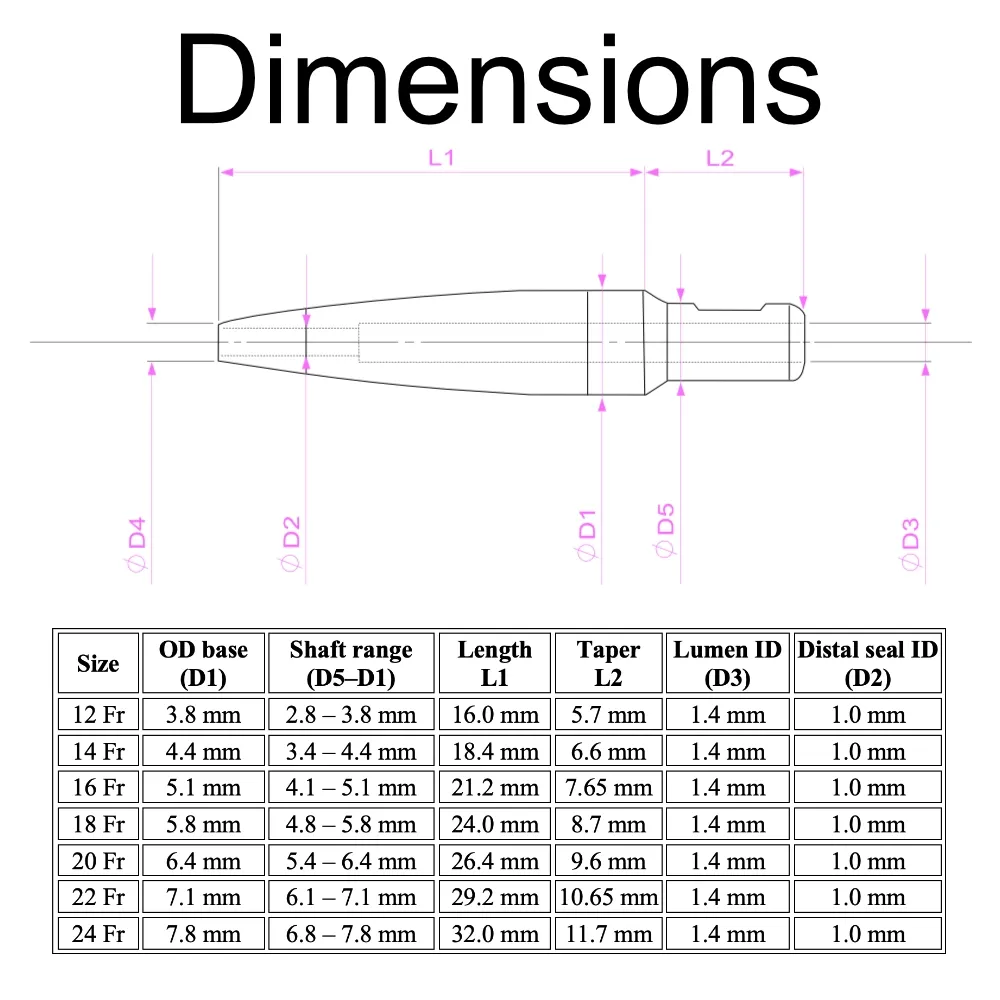
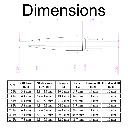
The geometry is a single, validated family that scales cleanly from 12 to 24 French. The base outer diameter (D1) matches the nominal Fr size. The taper length (L2) and total length (L1) follow a fixed ratio across the range, so transition behavior stays predictable whether you build a 12 Fr neurovascular aspiration prototype or a 24 Fr large-bore access dilator.
Guidewire lumen and distal seal
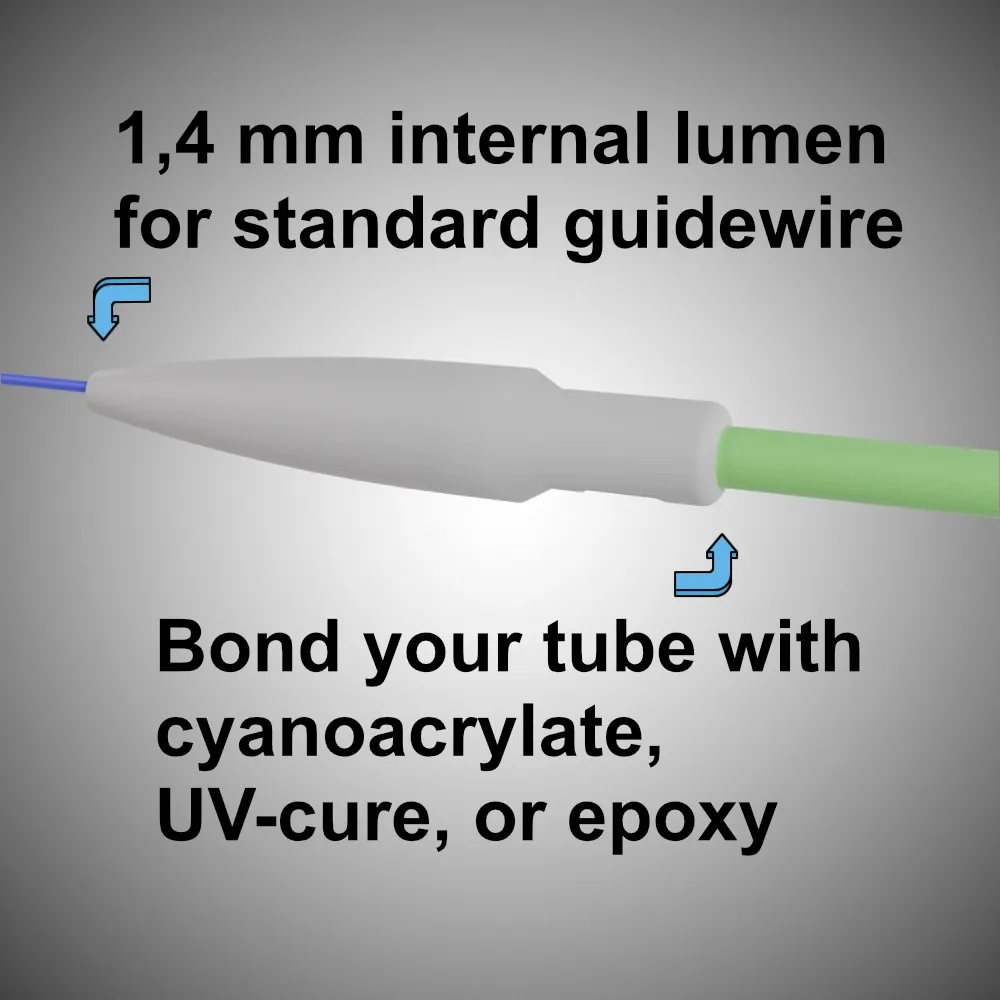
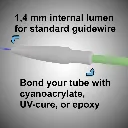
The internal lumen (D3) is held at 1.4 mm across all sizes, sized for over-the-wire builds running standard guidewires up to 0.035". At the distal end, the lumen transitions to a stepped section with a reduced diameter of 1 mm (D2) over a length of 3 to 10 mm. This stepped geometry creates a contact seal around the guidewire at the tip, preventing fluid leakback through the lumen during bench testing, replicating the sealing behavior found in finished catheter designs.
Proximal interface and shaft compatibility
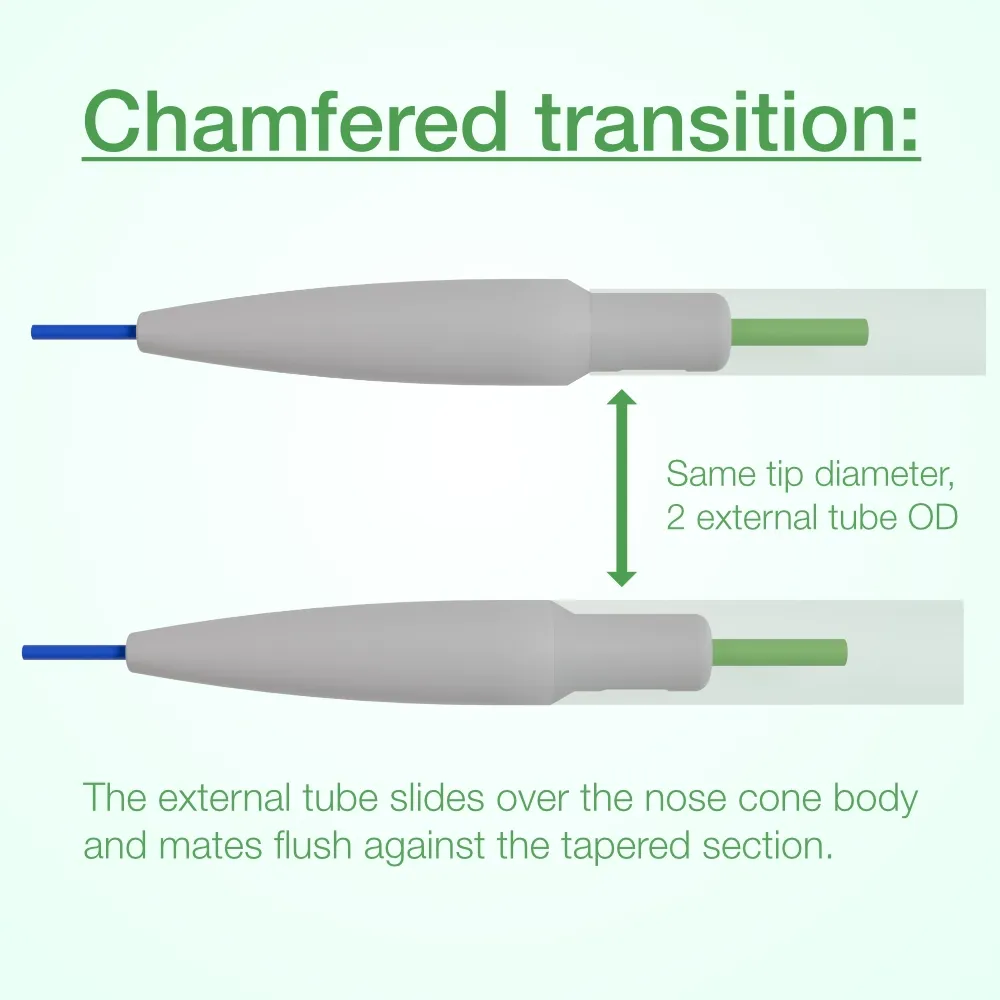
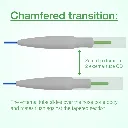
The rear section of the nose cone, the proximal end that receives the catheter shaft, is where most of the integration work happens. This zone has a reduced outer diameter (D5) and a chamfered transition, designed so that an external tube slides over the nose cone body and mates flush against the tapered section.
The chamfer eliminates any step or ledge at the junction between shaft and nose cone. This matters more than it might seem: in bench testing, a step at the distal transition creates drag, disrupts trackability, and produces results that do not reflect the behavior of a finished device.
The design accommodates external shaft diameters between D5 and D1, which means the same nose cone works with a range of tube sizes. This gives you flexibility to test different shaft diameters against the same tip geometry without changing the nose cone.
What it does for your build
Drop-in replacement for the soft distal segment of a prototype catheter. Bond it to your shaft with a Pebax-compatible adhesive (cyanoacrylate, UV-cure, or epoxy) and you have a real molded transition tip in minutes instead of running an in-house tip-forming or RF tipping cycle. Use cases we see most often:
- Vascular access sheaths and large-bore introducers
- Structural heart delivery systems (TAVI, mitral, tricuspid)
- Neurovascular aspiration catheters
- Peripheral and large-bore therapeutic delivery
- GI and ENT access devices
- Any early-stage build where you need to compare two or three durometers in parallel without committing to custom tooling
Because the parts are stocked and configurable, you can run a real A/B/C bench comparison: same geometry, three different Pebax grades.
What you choose
When you order, you configure three things:
1. Size (outer diameter at base)
Available in 12, 14, 16, 18, 20, 22, 24 French. All sizes share a 1.4 mm internal lumen sized for standard 0.035" guidewires.
2. Material (Pebax base)
- Pebax 2533 SA 01 (25 Shore D):
softest, maximum atraumaticity, ideal for distal-most segments and tortuous neurovascular or peripheral access.
- Pebax 5533 SA 01 (55 Shore D):
mid-range, good balance of softness and shape retention.
- Pebax 6333 SA 01 (63 Shore D):
firmer, for dilator and access-sheath transition tips.
- Pebax 7233 SA 01 (72 Shore D):
semi-rigid, for stiffer dilator applications and proximal transitions.
3. Options
- + BaSO₄ (radiopaque):
barium sulfate-loaded for fluoroscopic visibility. Available on Pebax 2533, 5533, and 7233.
- + Propell (lubricious):
friction-reducing additive. Available on Pebax 3533 (35 Shore D).
Intended use
Protobrix Nose Cones are bench prototyping components for catheter development. They are not medical devices, they are not sterile, and they are not intended for clinical, in vivo, or preclinical animal use. Their purpose is to let R&D teams iterate distal tip geometry, durometer, and radiopacity on the bench, fast and cheap, before committing to production-grade tooling. Materials and process approach those of a finished device closely enough to give meaningful bench results.
Lead time and ordering
7 days, every order.